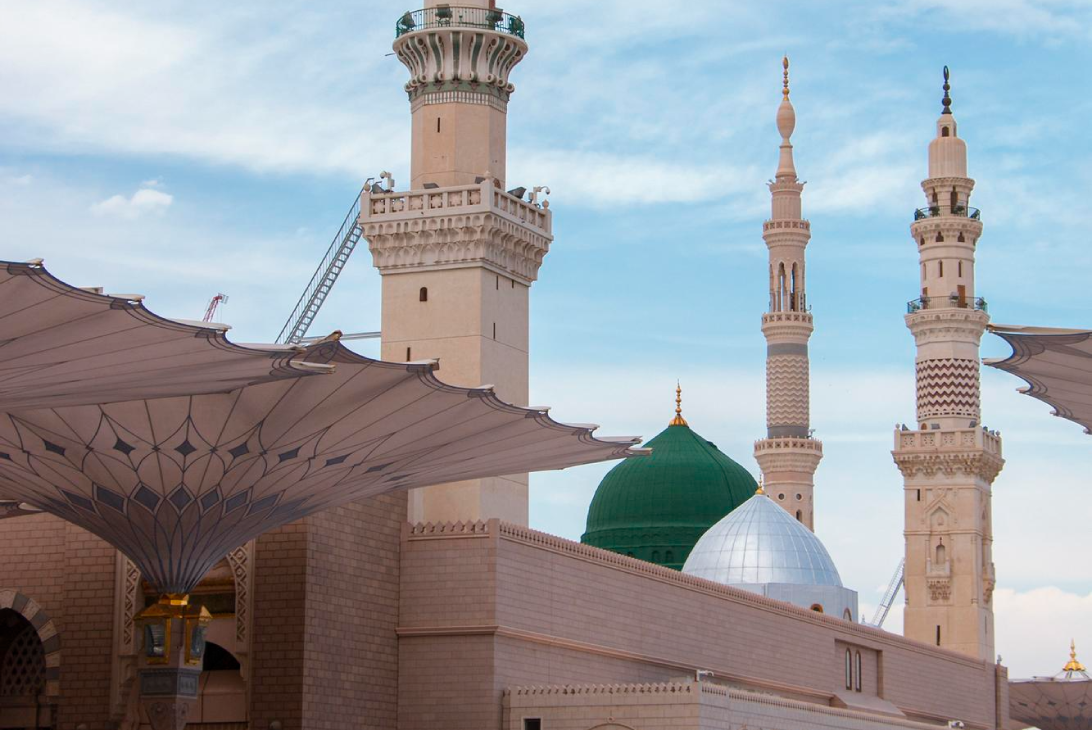
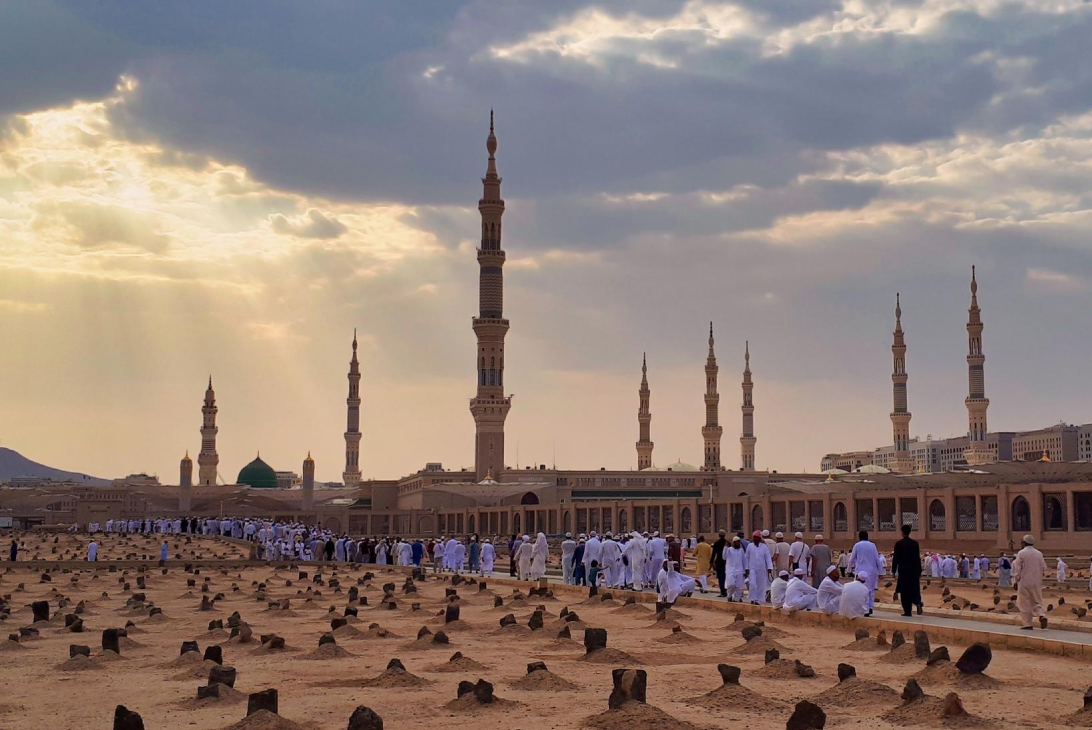
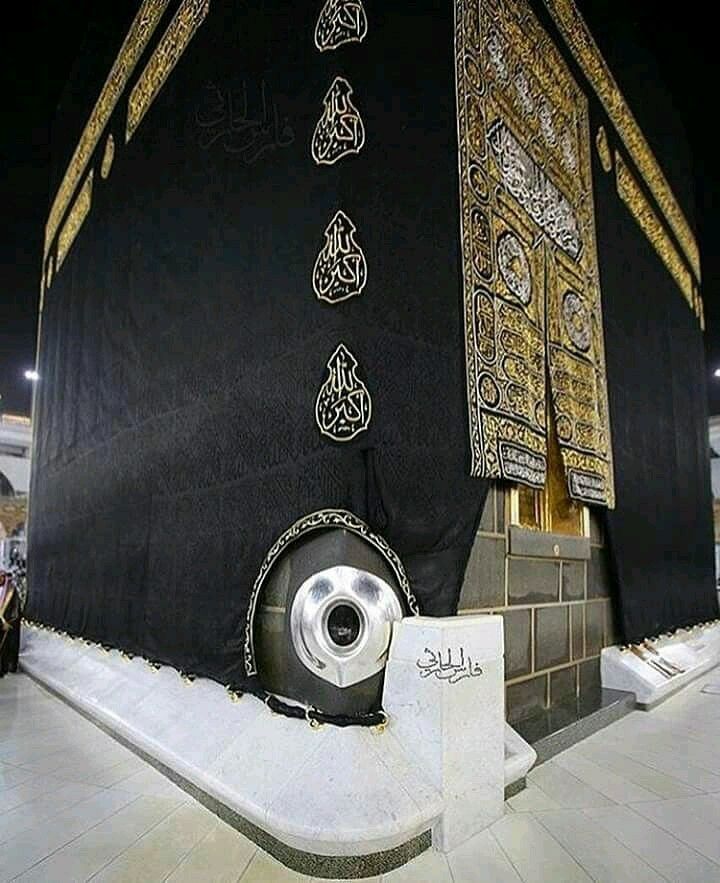
As you approach the Masjid of the beloved Prophet ﷺ, let your heart be overwhelmed with gratitude, humility and awe. This place was chosen by Allah for His Messenger and the best generations. Upon entering the blessed Masjid, recite the duʿā’ for entering and perform two rakʿahs of taḥiyyat al-masjid.
When one of you enters the masjid, he should not sit until he has prayed two rakʿahs. – The Messenger of Allah ﷺ (Bukhārī)
The towering minarets leave you in awe; the marble floors are cool against your feet. Pause for a moment. Cast your mind back more than 1,400 years, to when, in this very place, there stood a simple and humble structure. No grandeur, no ornament, just walls of mud and a roof of palm branches. Yet it carried a magnificence that no palace or monument on earth could ever match. This was the Masjid of the beloved Prophet ﷺ.
Here, the Prophet ﷺ nurtured his beloved Companions j, standing shoulder to shoulder in prayer, united in servitude to Allah. As foreheads touched the ground, there was no difference between the rich and poor, between Arab and non-Arab. It was a place visited by Jibrīl (radiy Allāhu ʿanhum) time and again, where Allah was constantly praised and glorified.
The Masjid was more than just a place of prayer. It was a university, where the greatest teacher ﷺ guided his students with words of revelation. It was a court of justice, where disputes were settled with fairness. It was the headquarters of the Muslim government, a place in which strategies were drawn and delegations were welcomed. It was a command centre, from which armies marched, treaties were forged, and the map of history was redrawn.
It was a place of compassion and belonging. The poor and homeless found shelter, the sick were tended to, and the needy were never turned away. Children played freely, women were welcomed, and men discovered brotherhood. It was a place of prayer, of learning, of community; a place where everyone found peace and belonging.
Imagine the Prophet ﷺ pausing mid-sermon to lift his grandchildren. Picture the Bedouin who urinated in the Masjid, yet was met not with anger but gentle instruction on proper etiquette. Imagine the beloved ﷺ hearing an infant cry during congregational prayer, shortening it rather than asking the mother to remain at home.
His mercy was not limited to humans. It was felt by the entire universe. Visualise the palm tree that sobbed when he ﷺ began using a pulpit instead of leaning on the tree. He did not ignore it; he descended and embraced the tree, comforting it as one comforts a child.
The Masjid was a place of camaraderie and conversation. Picture the post-fajr discussions he ﷺ had with his Companions where they would discuss their dreams. Imagine the Companions reciting poetry and recounting amusing stories from their days in Jahiliyyah, making the Prophet ﷺ smile.
The day came when the atmosphere in the Masjid changed. The Prophet ﷺ grew too weak to stand, and the Companions gathered as always, waiting for him to lead them in prayer. He ﷺ instructed Abu Bakr to lead the prayer, yet the masjid was shadowed by his absence.
On that final day, he ﷺ lifted the curtain of his room. Imagine how the Companions must have felt as they saw his ﷺ face, shining with a light that no worldly beauty could match, smiling as he looked upon the rows of faithful standing in prayer. He ﷺ signalled to Abu Bakr (raḍiy Allāhu ʿanhu) to lead once more and gently lowered the curtain. That was the last time they would see him alive.
 2. Madinah