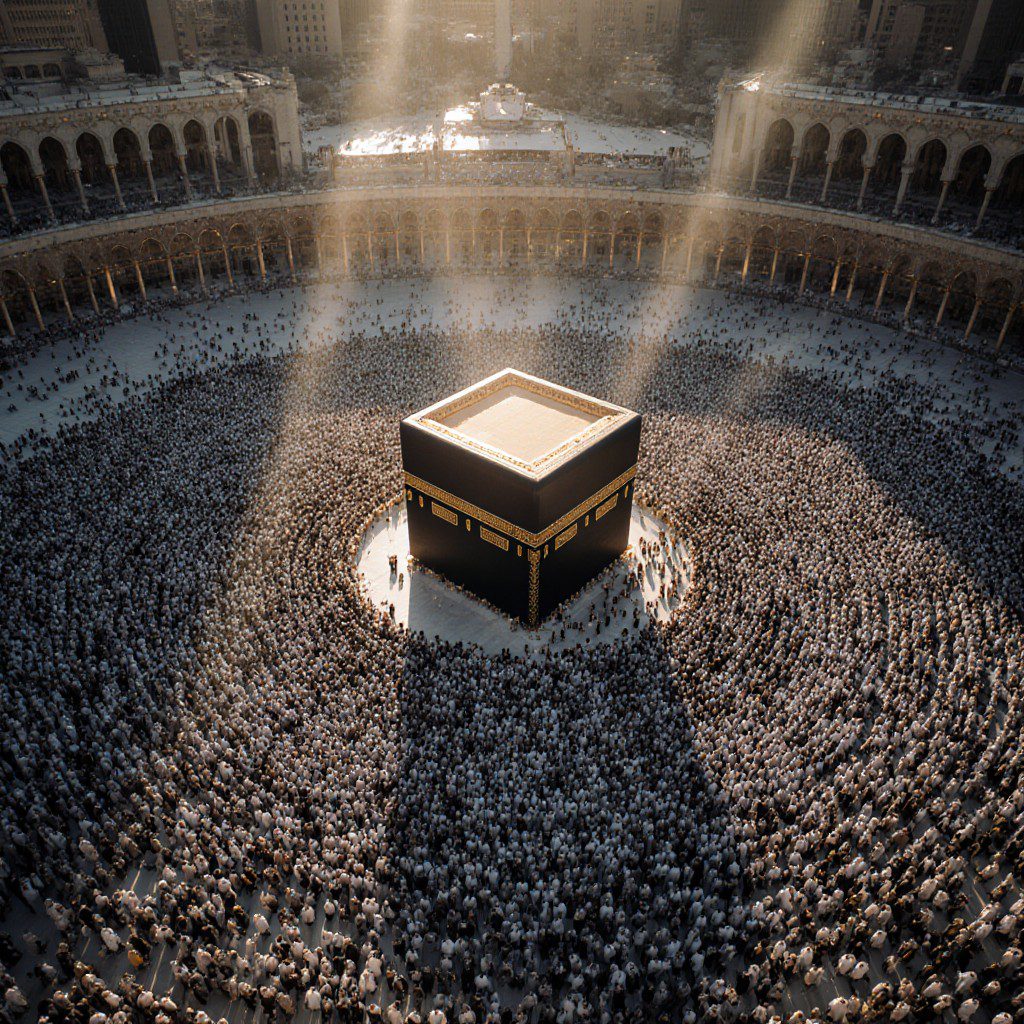
Many people fall into the trap of treating ʿumrah as a holiday. They arrive with a tourist mindset, focused on comforts, taking pictures and sightseeing, rather than internalising the awe, sanctity and spiritual intensity of ʿumrah. This shift in perspective can erode the essence of ʿumrah, turning sacred rites into mere rituals devoid of meaning.
The section below contains practical guidance on how to protect the spirit of your ʿumrah and avoid common mistakes that can spoil your ʿumrah.
1. Don’t Let Social Media Ruin Your ʿUmrah
Try to delete all unnecessary social media apps before you embark on your journey. Don’t assume that you won’t be tempted. Shayṭān will lure you in with the promise of doing a good deed, but before you know it, you’ll be scrolling mindlessly, comparing your experience to others, or seeking validation for your worship. Without realising it, your sincerity may begin to slip. It’s simply not worth the risk.
2. Don’t Treat ʿUmrah as a Photoshoot
ʿUmrah is a journey that is meant to be experienced, not photographed. Every step, every duʿā’ and every moment of worship is designed to transform your heart and draw you closer to Allah. Don’t trade that for selfies or live streams. They distract from the essence of ʿumrah: humility, presence, and connection with your Lord, and can lead to self-admiration or doing deeds for others.
Capture each moment in your heart, not on your phone or feed. When you feel tempted (and you will, as others around you take snaps), ask yourself: Does the posing, flashing, videoing, and snapping really reflect the heart of a someone who fears his sins and is coming desperately to Allah, begging for a clean slate?
You may feel pressured to ‘share’ everything on social media, including your good deeds. This may lead you to doing good for others instead of Allah. It can also lead to self-admiration and pride, because the constant validation and attention received through likes and comments, results in an inflated sense of self-importance and a sense of superiority over others.
3. Don’t Sin in the Blessed Lands
Allah (subḥānahū wa taʿālā) says, “… And whoever intends to deviate by doing wrong in it, We will cause them to taste a painful punishment” (22:25). In this āyah, Allah (subḥānahū wa taʿālā) warns of a severe punishment even for merely intending to commit wrongdoing in the sacred places.
Ibn ʿAbbās (radiy Allāhu ʿanhumā) said, “Committing seventy sins in Rukiyah (a place between Makkah and Ṭā’if ) is better than committing a single sin in Makkah.”
Therefore, to protect yourself from sins, ensure you:
- Lower your gaze.
- Don’t harm another believer.
- Stay constantly engaged in dhikr, even while walking or waiting. Keep a tasbīḥ in your hand as a reminder.
4. Don’t Waste Time
Every moment is precious. Every minute is an opportunity to become closer to Allah and seek His forgiveness. Don’t waste your time wandering through malls or chilling in cafes. Even during moments of waiting, whether in a queue or a lift, resist the urge to scroll through your phone or engage in idle talk. Instead, fill those moments with dhikr or Qur’ān recitation. Keep a tasbīḥ or muṣḥaf with you at all times, so there’s no excuse not to stay connected to the remembrance of Allah.
Shaykh Abūl Ḥasan Nadwī (raḥimahullāh) warned that Makkah was meant to be a place of simplicity, where pilgrims leave worldly comforts behind and allow their hearts to soften and renew. He cautioned that if the area around the Kaʿbah became filled with luxury and excess, the spiritual effect of hajj and ʿumrah would fade.
So don’t come to Makkah as a tourist, but come as a humble servant seeking Allah’s mercy and determined to return home with a heart renewed.