The 10th of Dhul Ḥijjah is known as the Day of Naḥr (sacrifice) and Eid al-Aḍhā. The Messenger of Allah ﷺ said: “The greatest day in the sight of Allah is the Day of Naḥr and then the Day of Qarr (11th of Dhul Ḥijjah)” (Abū Dāwūd).
The Journey From Muzdalifah to Mina
The Prophet ﷺ once again made another young Companion ride with him: his cousin al-Faḍl b. ʿAbbās (radiy Allāhu ʿanhumā). Along the way, the Prophet ﷺ stopped to answer people’s questions. A young beautiful woman came to ask the Prophet ﷺ a question and the Prophet ﷺ noticed al-Faḍl was looking at her. So the Prophet ﷺ turned to him and, noticing his gaze, took hold of his chin and turned his face away.
Reflect: The Prophet ﷺ was accessible to all, and everyone felt comfortable speaking directly to him. He was also very understanding of the feelings of men and women and showed them how to behave.
Reflect: The Prophet ﷺ invested in people, especially the youth. This teaches us a powerful lesson: we often focus so much on building structures, fancy mosques, and establishments, but we forget the most important investment: fellow believers and especially the youth. What are you doing to ensure that you’re investing in people?
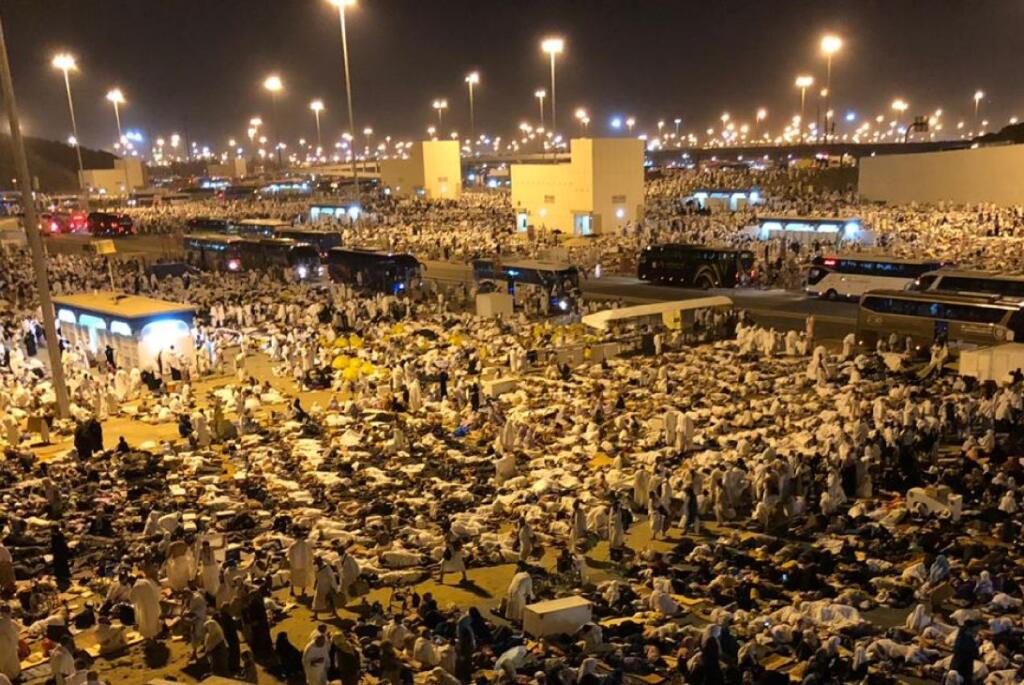
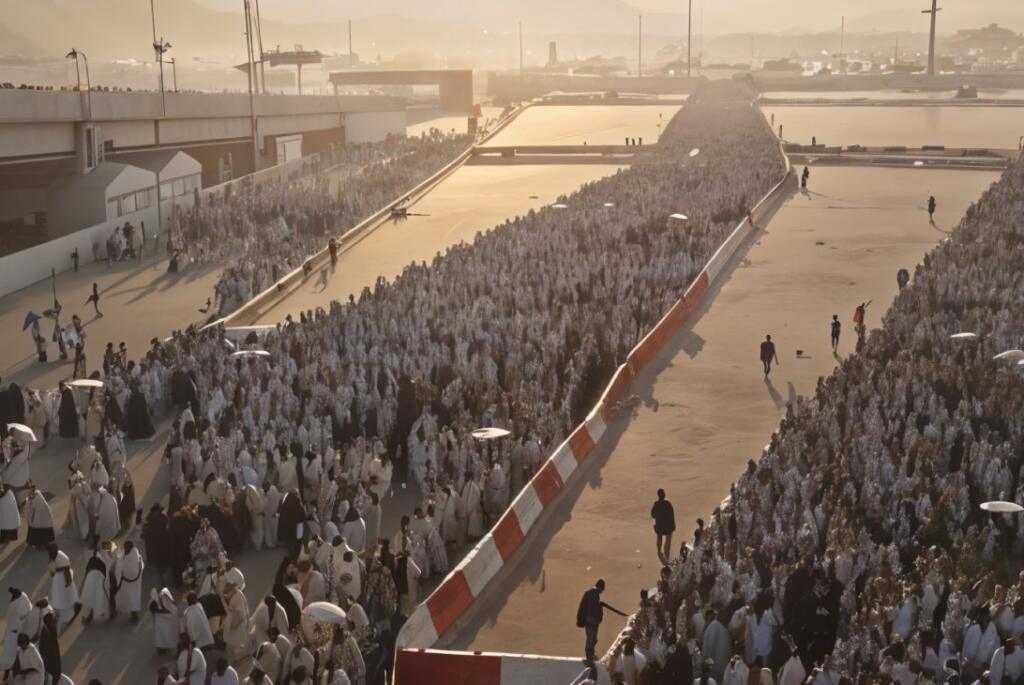
The journey from Muzdalifah to Minā is remarkable, especially if you’re walking. The spirit of the ḥujjāj you will witness is amazing. The buzzing, electric atmosphere will transform your fatigue into determination and fill your heart and body with renewed energy. All around you, the sound of the talbiyah and takbīr will reverberate through the air reminding you of the single aim that unites every pilgrim: the pleasure of Allah.
Tip: If you are healthy enough to walk from Muzdalifah to the Jamarāt (around 4 miles), you should seize this opportunity and walk.
Reflect: As you walk, take a moment to appreciate the power of the collective. The purpose of the ummah is to uplift and support each other. You will witness believers helping one another: sharing water, offering a cool spray, and encouraging one another to keep going. This is what the ummah is all about. In your own life, what are you doing to uplift the ummah? As you witness massacres of Muslims in Palestine and across various parts of the world, what are you doing to fulfil your duty? How are you supporting fellow believers in times of hardship?
Stoning the Jamarat
The Prophet ﷺ then reached the Jamarāt with Bilāl and Usāmah b. Zayd (radiy Allāhu ʿanhumā) to his sides, one holding his she-camel and the other shading him ﷺ with his robe. The Prophet ﷺ recited the takbīr as he threw each stone.
Reflect: Bilāl was a Black, former slave. Usāmah was the son of former slaves. The Prophet ﷺ chose to honour them above everyone else, and practically demonstrated the beauty, justice and equity of Islam.
The stoning of the Jamarāt should take place after sunrise on the 10th of Dhul Ḥijjah. When you reach the Jamarah al-ʿAqabah and are about to begin pelting, stop reciting the talbiyah. At the Jamarah, throw the seven pebbles, one by one, reciting ‘Allāhu Akbar’ with each throw. It is not necessary to hit the large pillar; the goal is simply to get the pebble into the basin.
The Secrets of Stoning the Jamarat
Stoning the Jamarāt is one of the most spiritually uplifting aspects of ḥajj. To understand its significance, it is important to reflect on the story of Ibrāhīm. Ibrāhīm (ʿalayhis-salām) did not have a child until he was over 80 years old. At his old age, Allah blessed him with a son, Ismāʿīl. When Ismāʿīl (ʿalayhis-salām) grew up, Ibrahim (ʿalayhis-salām) was faced with a great test. Allah (subḥānahū wa taʿālā) says,
“Then when the boy reached the age to work with him, (Ibrāhīm (ʿalayhis-salām)) said, “O my dear son! I have seen in a dream that I am sacrificing you. So tell me what you think.” He replied, “O my dear father! Do as you are commanded. Allah willing, you will find me steadfast” (37:102).
Reflect: Ibrāhīm (ʿalayhis-salām) is the close friend of Allah so why did he ask Ismāʿīl (ʿalayhis-salām) about the command to slaughter him? This interaction shows us the open line of communication he had with his son. Ibrāhīm’s own father was terrible, but t he did not use this as an excuse; instead he made a concerted effort to become the best father. What kind of a parent are you? What type of relationship do you have with your children?
As Ibrāhīm (ʿalayhis-salām) was on his way to sacrifice his son, Shayṭān came to him in the form of a man, trying to dissuade him from obeying Allah’s command. Ibrāhīm (ʿalayhis-salām) took seven pebbles and threw them at him, causing Shayṭān to flee. This happened three times.
As you stone the Jamarāt, reflect on the following:
1. Remember Ibrāhīm (ʿalayhis-salām). Through this act, you are remembering and honouring the story of Ibrāhīm (ʿalayhis-salām).
Reflect: Read the story of Prophet Ibrāhīm (ʿalayhis-salām). Think about how willing you are to sacrifice your own comforts, let alone your loved ones, for the sake of Allah. What does it mean to be willing to give everything and everyone up for Allah?
2. You can fight both human and jinn devils. Shayṭān is weak; he fled with just the throwing of pebbles. Thus, if your īmān is strong, you too can battle both human and jinn Shayāṭīn. Know that you can develop the faith and determination to resist those who would sway you to do what is displeasing to Allah.
3. Know your eternal enemy. Allah (subḥānahū wa taʿālā) says, “Surely Shayṭān is an enemy to you, so take him as an enemy. He only invites his followers to become inmates of the Blaze” (35:6). Never be complacent and think that you are beyond Shayṭān’s influence.
4. Use your weapon. The remembrance of Allah is the most powerful weapon against Shayṭān. Allah (subḥānahū wa taʿālā) says, “Indeed, when Shayṭān whispers to the righteous, they remember (their Lord) then they start to see clearly” (7:201). Dhikr will always drive away Shayṭān.
5. Understand the purpose. The purpose of stoning the Jamarāt is to establish the remembrance of Allah. The Prophet ﷺ said, “Ṭawāf around the Kaʿbah, walking between Ṣafā and Marwah, and the stoning of the Jamarāt were only prescribed to establish the remembrance of Allah” (Tirmidhī). The stoning of the Jamarāt symbolises the choice to resist Shayṭān and always turn towards Allah (subḥānahū wa taʿālā).
6. Always seek refuge in Allah from Shayṭān. Istiʿādhah (seeking protection) is a great act of worship through which you acknowledge Allah’s ultimate power, and your own weakness in combating the unseen enemy without His help.
7. Beware of the tricks of Shayṭān. He is notorious for distorting the truth and convincing you that the sins you’re committing are acceptable because “everyone is doing them” or because “they’re not that bad.” Allah (subḥānahū wa taʿālā) says, “O humanity! Indeed, Allah’s promise is true. So do not let the life of this world deceive you, nor let the Chief Deceiver deceive you about Allah” (35:5).
Reflect: What actions do you sometimes justify by telling yourself they’re ‘not that bad’? Have you normalised a sin because it’s socially accepted, or because you’ve seen others doing it too?
Act: Ask Allah to forgive you for the sins you are aware of and also the sins that you are unaware of.
8. Don’t be a slave to Shayṭān. When you throw these seven pebbles and declare ‘Allāhu Akbar’:
a. You are also committing to disobey Shayṭān, following the example of Ibrāhīm (ʿalayhis-salām).
b. You are affirming that Allah is Greater than:
- your servitude to Shayṭān;
- the desires you have been following;
- the bad habits you’ve struggled to break and;
- the sins you’ve been committing
c. When you’re throwing each pebble, envision as though you’re ripping out the servitude to Shayṭān in your heart and throwing it away into the basin, never to return to it again. Ḥajj is the journey of freedom from the shackles of your nafs. You are throwing away your sins and servitude to Shayṭān.
The Sermon of the Prophet ﷺ on the 10th of Dhul Ḥijjah
The Prophet ﷺ asked Jarīr b. ʿAbdillah (raḍiy Allāhu ʿanhu) to gather the people so that he could address them.
Mounted on his camel, in between the Jamarāt, he ﷺ raised his voice to give a long sermon. He ﷺ began by praising and thanking Allah, and then expounded upon the following:
- A true muslim is the one who keeps all muslims safe from their tongues and hand.
- A true believer is the one whom people trust with their lives and property.
- A true muhājir (migrant for Allah’s sake) is the one who abandons all sins.
- A true mujāhid (striver) is the one who strives in obedience to Allah.
- Parents should not harm their children and vice versa.
- Protect yourself from Shayṭān.
-
Human blood, property and honour are forbidden for you (to violate and claim unlawfully), and to do so would be like violating the sanctity of this (sacred) day in this (sacred) month.
-
There are three vital matters for a believer to keep in mind: ikhlāṣ (sincerity), giving sincere advice to those in authority and staying with the Muslim community.
The Prophet ﷺ concluded with: “I do not know whether I will meet you after this day. May Allah have mercy on anyone who listens to my words, understands and conveys them to others.”
He also requested: “Let those of you who are present inform those who are absent.”
Raising his head to the sky, he called out “Have I delivered my message?”The people replied in unison: “Yes!” Calling to Allah, he proclaimed three times, “My Lord, bear witness!”