This [Uḥud] is a mountain that loves us and that is loved by us. – The Messenger of Allah ﷺ (Bukhārī)
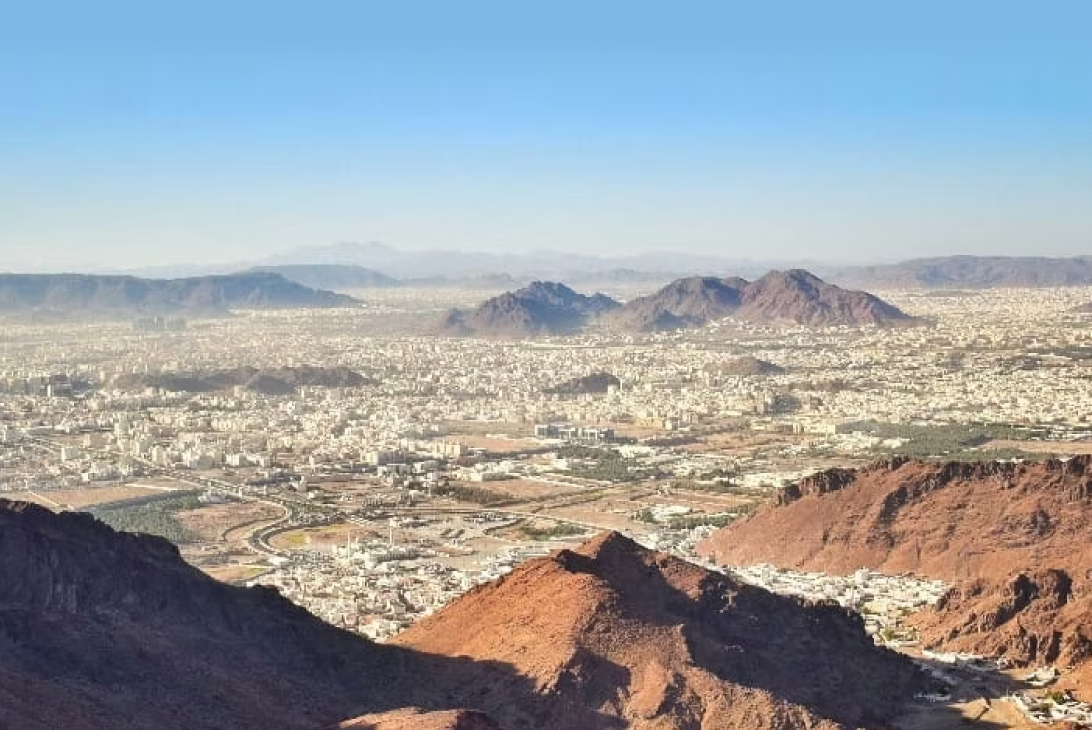
As you visit the great mountain of Uḥud, recall that this was a mountain deeply beloved to the Messenger ﷺ. It is the very mountain where the Muslims experienced one of their most challenging days. After the glorious victory at Badr, the Quraysh had come seeking revenge, and the Prophet ﷺ and his Companions met them in battle, armed with strong faith, personnel, and strategy.
The battle began, but just as the Muslims were gaining victory, several archers rushed down from their posts on a hilltop, out of eagerness for the spoils of war. The enemy used this moment to strike from behind, gaining the element of surprise. It was at this moment that everything changed. The believers were shaken, seized with panic; rumours spread of the martyrdom of the Prophet ﷺ.
The Prophet ﷺ was struck. A rock hit his blessed face, an arrow broke his front teeth, and a slashing sword drew blood from his face. Through his pain, the Prophet ﷺ cried out: “How can a people prosper who strike their Prophet on the head and break his teeth?”
Mount Uḥud was where Ṭalḥah (raḍiy Allāhu ʿanhu) offered his body as a stepstool for the Prophet ﷺ, and the Prophet ﷺ declared “Paradise is obligatory for Ṭalḥah!” It was by this mountain that Muṣʿab b. ʿUmayr (raḍiy Allāhu ʿanhu was struck down; where once he had been dressed in finery, on that day they could find nothing to shroud him in except a cloth that could not cover his whole body.
It was on this mountain that Abū Dujānah (raḍiy Allāhu ʿanhu) fought and shielded the Prophet ﷺ with his own back, the arrows striking him instead. It was here where the Prophet ﷺ asked, “Who is the man who will sell us his soul?” Ziyād b. al-Sakan (raḍiy Allāhu ʿanhu) leapt forward and fought until his wounds overwhelmed him. The Prophet ﷺ summoned him, “Come closer to me!” He drew near, and the Prophet ﷺ drew him to lay on his lap until he died there.
This was the mountain that witnessed miracles. Anas b. al-Naḍr (raḍiy Allāhu ʿanhu) stood there and said: “Indeed, I can smell the fragrance of Paradise from the direction of Uḥud.” And then there was Ḥanẓalah (raḍiy Allāhu ʿanhu), a man who got married the night before the Battle; when he heard the call of jihād, he left his bride and rushed to the battlefield, without even taking time to bathe. He fought with courage until he was martyred. After the battle, the Messenger of Allah ﷺ said about Ḥanẓalah, “I saw the angels bathing him between heaven and earth, with the water of the clouds, in silver vessels!”
This was also the mountain that witnessed one of the most heinous crimes: the brutal murder of Ḥamzah (raḍiy Allāhu ʿanhu), the uncle of the Prophet ﷺ. Ḥamzah was more than just the Prophet’s uncle; they had shared a wet nurse as children, and as an adult, Ḥamzah was known as a fierce warrior who had defeated every opponent he faced at Badr. In revenge, Quraysh had promised Waḥshī b. Ḥarb, a slave, his freedom in exchange for killing Ḥamzah. The disbelievers mutilated his body and the bodies of other Companions, celebrating their victory as Hind chewed his liver.
It was on that day that the mountain heard the cry of the Prophet ﷺ, weeping over his uncle’s body with a grief none had ever seen before.
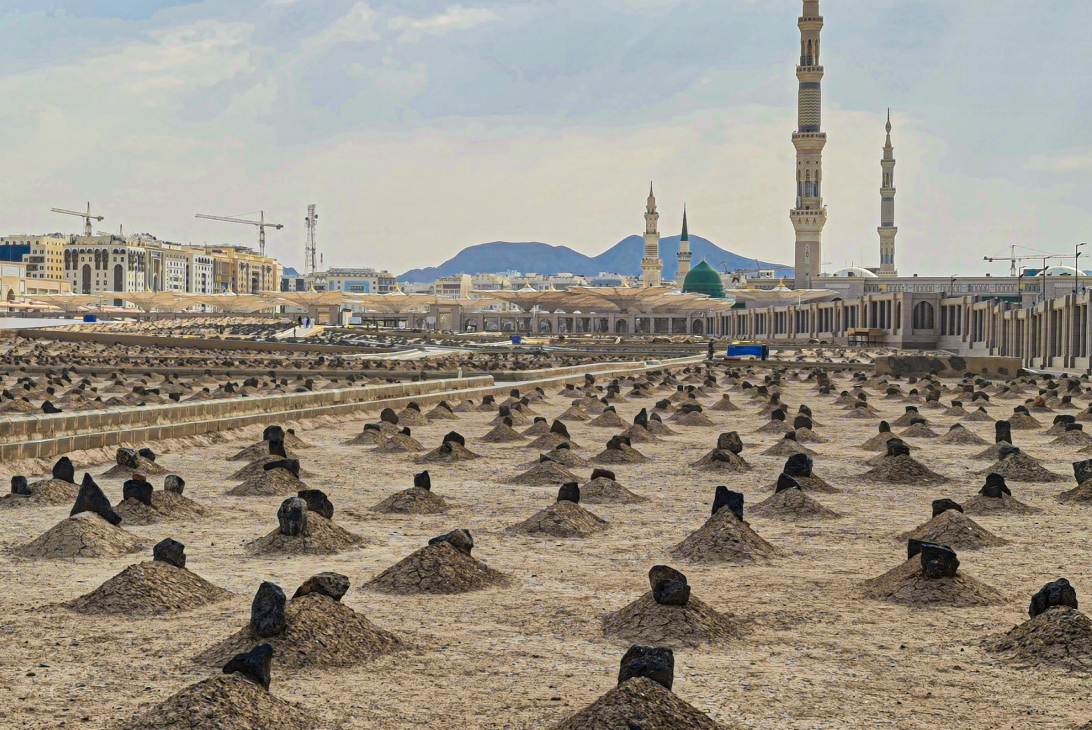
Take the time to visit the graveyard at Uḥud and read the names of the Companions listed there. Imagine the pain of the Prophet ﷺ as he prayed over his beloved friends and buried them, knowing that they had sacrificed everything for their Lord and His Messenger.
They sacrificed so that the religion of Islam could reach you. They sacrificed so that you could taste the sweetness of īmān and stand at Uḥud today.
Their sacrifice was honoured by the Almighty:
رَّضِيَ اللَّهُ عَنْهُمْ وَرَضُوا عَنْهُ وَأَعَدَّ لَهُمْ جَنَّاتٍ تَجْرِي تَحْتَهَا الْأَنْهَارُ خَالِدِينَ فِيهَآ أَبَدًا ۚ ذَٰلِكَ الْفَوْزُ الْعَظِيمُ
“…Allah is pleased with them and they are pleased with Him. And He has prepared for them Gardens under which rivers flow, to stay there for ever and ever. That is the ultimate triumph” (9:100).
Now, you must ask yourself: What will you sacrifice for the sake of Allah? How will you carry their legacy forward?
The Prophet ﷺ was pelted with stones in Ṭā’if. He was boycotted and besieged by his own people in the valley of Abu Ṭālib. The innards of a camel were thrown upon his noble head. He was called a sorcerer and a liar. His blessed blood flowed on the day of Uḥud. He was surrounded in Madinah by enemies on all sides. The hypocrites and Jews plotted against him. And in the end, he left this world after eating poisoned meat. This dīn came to you through hardship and sacrifice. So do not take it lightly. Do not let it slip away.