إِنَّ الصَّفَا وَالْمَرْوَةَ مِنْ شَعَآئِرِ اللّٰهِ فَمَنْ حَجَّ الْبَيْتَ أَوِ اعْتَمَرَ فَلَا جُنَاحَ عَلَيْهِ أَنْ يَّطَّوَّفَ بِهِمَا وَمَنْ تَطَوَّعَ خَيْرًا فَإِنَّ اللّٰهَ شَاكِرٌ عَلِيْمٌ
“Indeed Ṣafā and Marwah are among the symbols of Allah. So whoever comes to the House for ḥajj or performs ʿumrah, there is no sin for him if he walks between them. And whoever does good willingly, Allah is truly Appreciative, All-Knowing” (2:158).
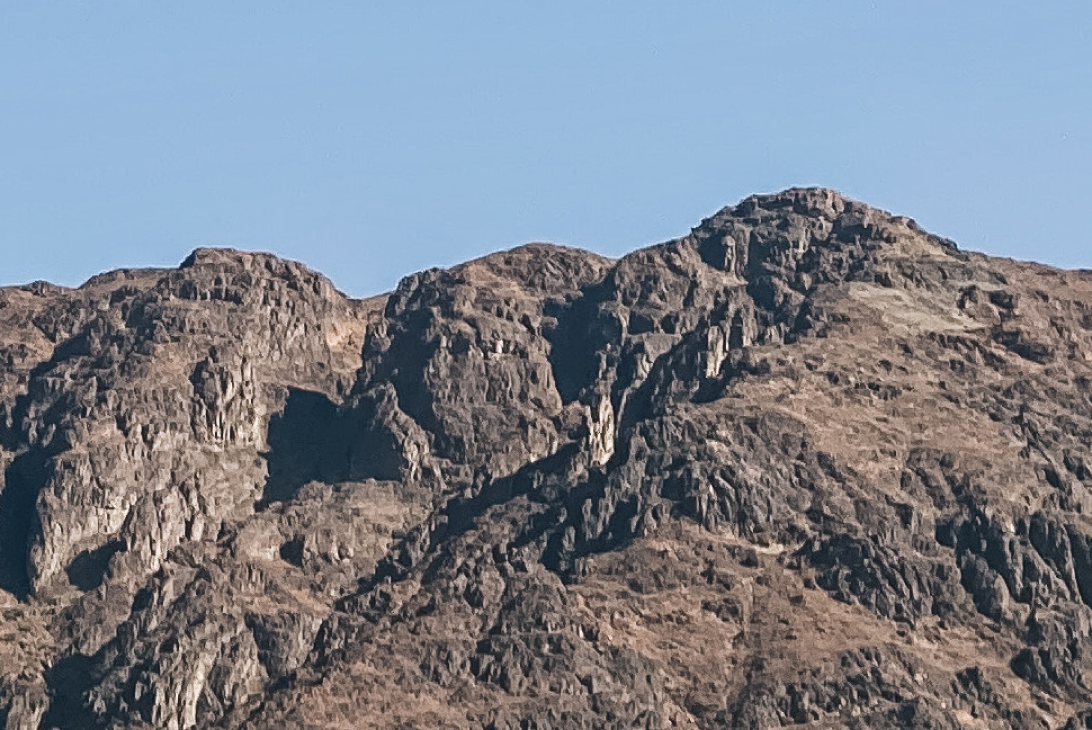
The Prophet ﷺ approached Mount Ṣafā and recited:
إِنَّ الصَّفَا وَالْمَرْوَةَ مِنْ شَعَآئِرِ اللّٰهِ أَبْدَأُ بِمَا بَدَأَ اللّٰهُ بِه
“Indeed, Ṣafa and Marwah are among the symbols of Allah… (2:158). I begin with what Allah began with.”
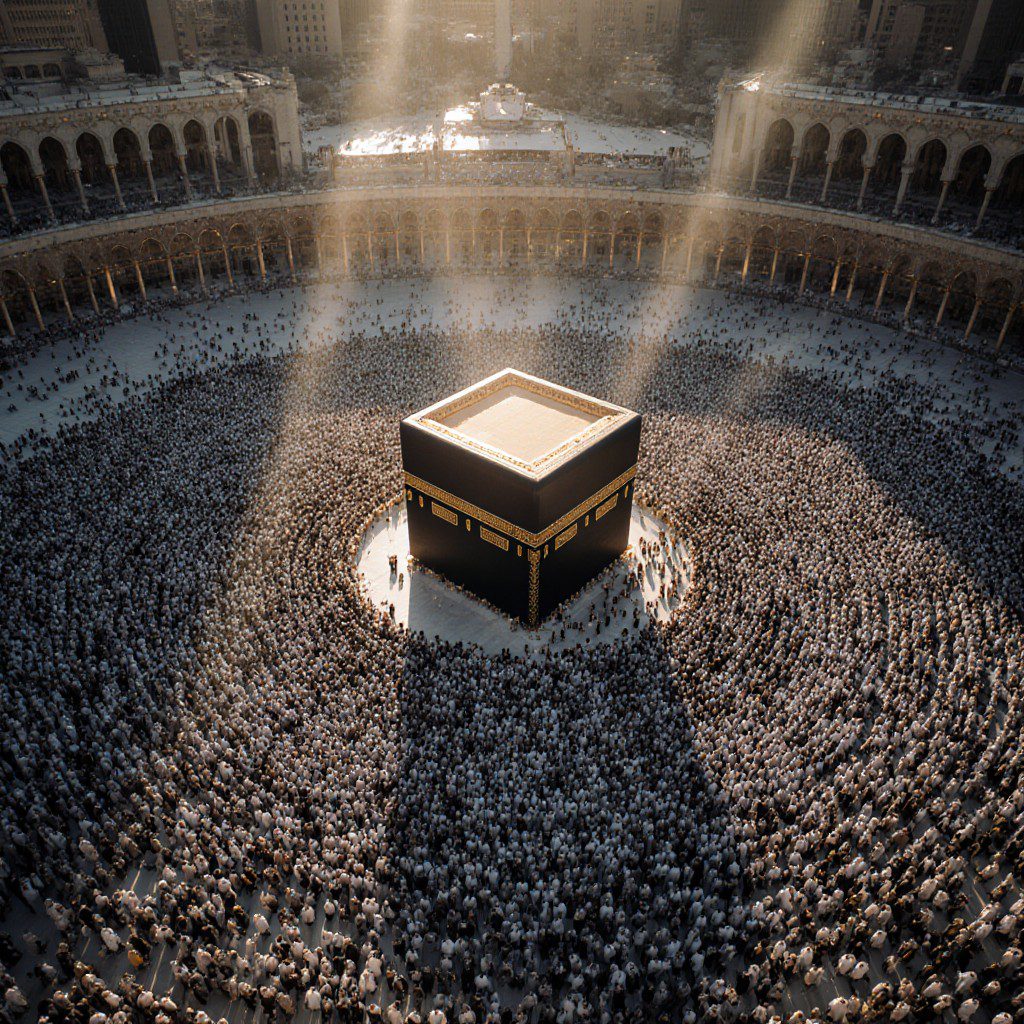
He climbed Ṣafā until he could see the Kaʿbah. He then faced the qiblah, proclaimed the Oneness of Allah and magnified Him, and then said:
لَا إِلٰهَ إِلَّا اللّٰهُ وَحْدَهُ لَا شَرِيْكَ لَهُ ، لَهُ الْمُلْكُ وَلَهُ الْحَمْدُ ، وَهُوَ عَلَىٰ كُلِّ شَيْءٍ قَدِيْرٌ ، لَا إِلٰهَ إلَّا اللّٰهُ ، أَنْجَزَ وَعْدَهُ ، وَنَصَرَ عَبْدَهُ ، وَهَزَمَ الْأَحْزَابَ وَحْدَهُ
“There is no god worthy of worship except Allah. He is Alone and He has no partner whatsoever. To Him Alone belong all sovereignty and all praise. He is over all things All-Powerful. There is no god worthy of worship except Allah. He fulfilled His promise, granted victory to His servant, and He Alone defeated the coalition forces” (Muslim).
The Prophet ﷺ then made duʿā’ in between each utterance of the above. He did this three times.
He then came down from Mount Ṣafā, walking at a measured pace. At the bottom of the valley, he started running at a medium pace* and after passing the middle of the valley (this area is now marked with green lights), he resumed walking towards Marwah.
The Prophet ﷺ walked up Marwah and when he could see the Kaʿbah, he repeated the same process as he had done in Ṣafā. He would recite the dhikr and make duʿā’. He continued doing this for each round of the saʿy.
*This is specific to men. Women will walk as usual.
Saʿy is not a race against time, nor a competition to see who is the fastest. It is meant to take time. Savour every moment as you feel your heart connect to Allah and internalise the secrets of saʿy.
Act: At the beginning of each round, at each mountain:
- Say the above dhikr, then make a duʿā’.
- Say it a second time, and make duʿā’.
- Say it a third time, and make a duʿā’.
Then continue with your next round.
The Secrets of Saʿy
1. Think of Hājar (ʿalayhas-salām) and the effort she exerted as she ran between the mountains, searching for water. A woman whose dedication and efforts were seen, appreciated and loved by Allah that her actions are now honoured and emulated by millions.
Hājar (ʿalayhas-salām) ran desperately between Ṣafā and Marwah, hoping for nothing more than a container of water. Yet, what Allah gave her was the eternal spring of Zamzam which flows to this very day. Allah’s help when it arrives is far greater than you could ever imagine.
2. Saʿy means to struggle and to strive. It teaches you that while your reliance (tawakkul) on Allah should never waver, you must also do your part, just as Hājar (ʿalayhas-salām) did. If you help the dīn of Allah, He will help you and provide for you in ways beyond your imagination. Allah ﷻ says:
يـٰٓأَيُّهَا الَّذِيْنَ اٰمَنُوْٓا إِنْ تَنْصُرُوا اللّٰهَ يَنْصُرْكُمْ وَيُثَبِّتْ أَقْدَامَكُمْ
“Believers! If you help (the dīn of) Allah, He will help you and make you stand firm…” (47:7).
Reflect: As you see the state of the ummah and the situation in the Blessed Land, do you resign yourself to helplessness, or are you putting in the maximum effort you can for the ummah’s revival?
3. Hājar (ʿalayhas-salām) showed immense patience and resilience in the face of great difficulty. She didn’t complain or question the will of Allah.
Reflect: What challenges are you currently facing in life? What is causing you stress and worry? How can you respond with patience like Hājar (ʿalayhas-salām)?
4. Saʿy is a powerful embodiment of complete ʿubūdiyyah (true servitude to Allah) and wholehearted adherence to the sunnah of the Prophet ﷺ. In every step, you follow Allah’s command and the Prophet’s example, even when you may not fully grasp the wisdom behind it.
This is the essence of submission: trusting the One who is All-Knowing, All-Wise.
Reflect: Are there areas in your life where you hesitate to follow a command of Allah or a sunnah of the Prophet ﷺ simply because you can’t understand its full purpose or wisdom? What would it look like to surrender fully, trusting that He knows what you do not?
5. Just as Hājar (ʿalayhas-salām) searched for a source of life and mercy, know that you are searching for something that is incredibly dear to you: the mercy of Allah. Perhaps, just as Allah blessed Hājar (ʿalayhas-salām) and Ismāʿīl (ʿalayhis-salām) with the water of Zamzam, He will also bless you with His everflowing mercy.
6. Saʿy symbolises the servant’s movement back and forth in the courtyard of the king’s palace, coming and going repeatedly, showing devotion and hoping for the king’s merciful gaze. It’s like someone returning again and again, hoping for mercy if not in the first encounter, then in the next.
7. As you walk between Ṣafā and Marwah, think of the back-and-forth on the Day of Judgement. Visualise the scene when people will be in great distress, desperately running from one Prophet to another, pleading with them to intercede with Allah to at least start the Judgement. The situation will be so dire that even the noble Messengers will be gripped with fear, and the mighty angels will tremble.
8. Imagine the Prophet ﷺ at the start of his mission, when he climbed the same mountain (Mount Ṣafā) and called his people to the worship of the One True God. The disbelievers of Makkah ridiculed him and said to him: “Woe to you! Is this why you gathered us?!” Yet 23 years later, during the farewell ḥajj, that very same mountain echoed with “Allāhu Akbar” and “Lā ilāha illa Allāh.” This served as a powerful reminder that the truth will always prevail against falsehood.
Reflect: What truth are you afraid of standing up for? What are you hesitating to say or do due to fear of ridicule, rejection or loss of wealth, status or career?
9. As you repeat ‘لَا إِلٰهَ إلَّا اللّٰهُ ، أَنْجَزَ وَعْدَهُ ، وَنَصَرَ عَبْدَهُ ، وَهَزَمَ الْأَحْزَابَ وَحْدَهُ: [There is no god worthy of worship except Allah. He fulfilled His promise, granted victory to His servant, and He Alone defeated the coalition forces,’] remember that victory is from Allah Alone. He is in control of everything: no country, army, or empire holds even an ounce of might compared to His.
Reflect: Feel the unity of the believers as you all recite this same dhikr, and let it motivate you to take action for the benefit of the ummah.